
here’s what you need to know:
OVERVIEW
While the modern economy offers the promise of technology to create new products, new markets and an increasingly competitive workforce, that same technology when misused, can do just the opposite. In the marketplace of today, entrepreneurs have instant access to millions of potential customers at their fingertips and they are - and should be - limited only by the extent of their imaginations. But those same technologies if unchecked can be leveraged to stifle innovation, slow the creation of small businesses and impugn freedoms heretofore taken for granted. An example of this challenge is playing before our eyes in the current political and policy environment.
BACKGROUND
In 1998, in response to an onslaught of music, movie and other artistic piracy, Congress passed the Digital Millennium Copyright Act intended to protect online intellectual property and their associated copyrights against theft and misuse. The law further sought to balance the interests of both producers and consumers of online content and created stiff penalties for the production and sale of technology to circumvent the controlled access of copyrighted works. But in the nearly 30 years since the law’s passage, a variety of other industries have taken advantage of this law - far from its intent - to protect their products and services from competition.
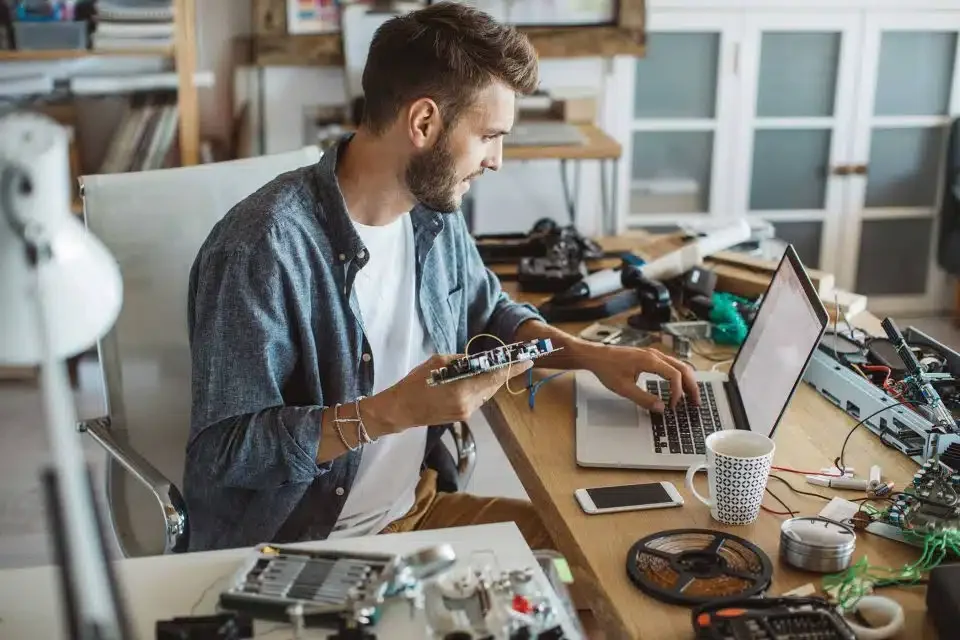
Modern electronics, appliances, automobiles, and even agricultural machinery are increasingly locked behind digital walls, proprietary technology, and restrictive parts-distribution policies and over time have created a subtle but profound shift in the relationship between consumers and the products they buy.
The age-old concept of ownership - where buying an item meant you had the undisputed right to modify, fix, or tinker with it - has been systematically eroded. Essentially manufactures have created products that only they can update and service leaving consumers as defacto renters on items they have actually purchased.
As a result, a quickly growing global movement has emerged around the issue of “Right to Repair” which calls for manufacturers to make diagnostic tools, repair manuals, spare parts, and software patches available to independent repair shops and everyday consumers.
In short, the Right to Repair movement represents a fundamental restructuring of consumer rights, economic resilience, and environmental sustainability.
CURRENT POLITICAL ENVIRONMENT
While both major political parties seem to be drifting further and further apart from each other, the Right To Repair issue is an anomaly.
From the left, progressive Democrats have long been lamenting the negative environmental impacts of increasingly “disposable” products. Electronic waste (e-waste) is the fastest growing solid waste stream in the world and those products - smartphones, computers, e-readers - are full of toxic heavy metals like lead, mercury and cadmium. The concept of “planned obsolescence”, once associated with the American auto industry of the 1970s, has reappeared in the modern-day electronics industry as constant upgrades, battery limitations and evolving chip technology make repair of a device almost impossible and replacement cost effective.
Republicans, for their part, have increasingly joined Democrats under the banner of consumer protection and their evolution to a more populist platform and away from their traditional alliances with Corporate America finds them increasingly at odds with the manufacturing center.
In fact, President Trump recently signed a "Freedom to Fix" memorandum directing the EPA to expand consumers' rights to repair their own cars and use affordable aftermarket parts. The directive instructs the EPA to deprioritize civil enforcement against individuals repairing their own vehicles and additionally, the FTC secured a right-to-repair settlement with John Deere, allowing farmers and independent mechanics to fix their own equipment.
In Congress, there is also significant momentum behind the bipartisan Repair Act (focused on automobiles) and the Farm Act (focused on agricultural machinery). These bills aim to force manufacturers to share proprietary wireless data, diagnostics, and software keys with independent operators on "fair and reasonable terms”.
Additionally, over 30 states - blue and red alike - have introduced legislation in this space and 2027 will see vigorous action in this policy area.
SUMMARY:
Americans for a Modern Economy is committed to ensuring that local, state and federal policies reflect changing technologies that are reshaping the way consumers, businesses and communities operate in the 21st century economy. We seek to find the proper regulatory framework that adequately protects consumers, provides a level playing field promoting healthy and honest competition but doesn’t stifle innovation. That proper framework is currently out of balance. Instead of being empowered by technology, consumers are increasingly being overpowered by manufacturers, small businesses are being squeezed out of the marketplace, and the freedom of traditional ownership is increasingly threatened. Policy makers need to push back against current policy trends and ensure that consumers and small businesses are not punished but empowered.